
Our services
Request an appointment
Reserve your spot with our medical team in just minutes.
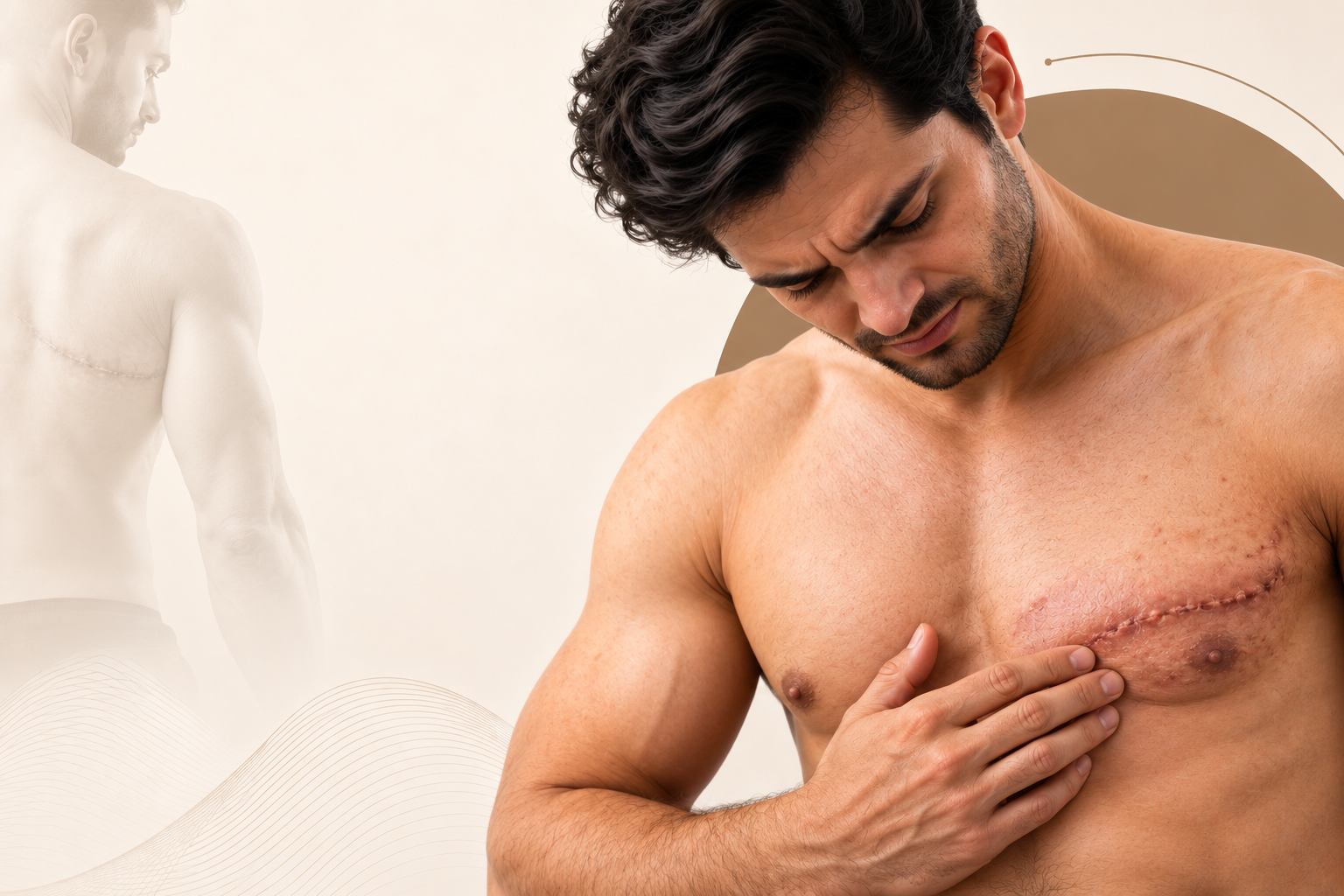
Post Oncological Reconstruction in Jaipur | Restorative Surgery by Dr. Sushrut Kalra
Post oncological reconstruction focuses on restoring the structure and function of tissue affected by cancer surgery. Whether related to breast cancer, head and neck cancers, or skin cancer removal, this type of reconstruction goes beyond appearance alone, it plays an important role in restoring everyday functions like breathing, swallowing, speaking, and movement.
Dr. Sushrut Kalra provides advanced reconstructive care in Jaipur, working closely with your oncology team throughout treatment. By coordinating early, often even before the tumor is removed, reconstruction can be planned carefully to support the smoothest possible recovery.
Clinical Concerns Addressed in Cancer Reconstruction
-
Head and Neck Reconstruction Rebuilds structures affected by head and neck cancer surgery, with a focus on restoring safe breathing, speech, and swallowing.
-
Tissue Transfer Techniques In more complex cases, healthy tissue from elsewhere in the body can be carefully transplanted to the affected area, ensuring it has the blood supply needed to heal well.
-
Breast Reconstruction After Mastectomy Rebuilds a natural breast shape after cancer surgery, using either implants or your own tissue, depending on your needs.
-
Reconstruction After Skin Cancer Removal Repairs areas affected by skin cancer surgery, particularly on the nose, ears, and eyelids, helping restore natural appearance and function.
-
Care for Tissue Affected by Radiation Reconstruction in areas that have undergone radiation requires extra care, since healing can be more delicate in these cases. Healthy, well supplied tissue is prioritized to support proper healing.
-
Supporting Your Return to Daily Life Beyond the physical rebuilding, the goal is helping you return to your normal routine and daily activities with confidence.
Frequently Asked Questions
It's reconstructive surgery performed to restore structure and function to tissue affected by cancer treatment, supporting both physical healing and everyday function.
This can be done immediately during the same surgery as tumor removal, or later on, depending on your treatment plan and what your care team recommends.
This is commonly needed after breast cancer, head and neck cancers, and skin cancers that require more extensive removal.
Depending on the case, healthy tissue may be transplanted from elsewhere in the body, with its blood supply carefully reconnected to support healing.
No, reconstruction is planned carefully alongside your oncology team to ensure future checkups and imaging can still be done effectively.
This varies based on complexity, ranging from about 10 to 14 days for simpler cases to a longer hospital stay for more complex procedures, with full healing developing over 12 to 18 months.