
Our services
Request an appointment
Reserve your spot with our medical team in just minutes.
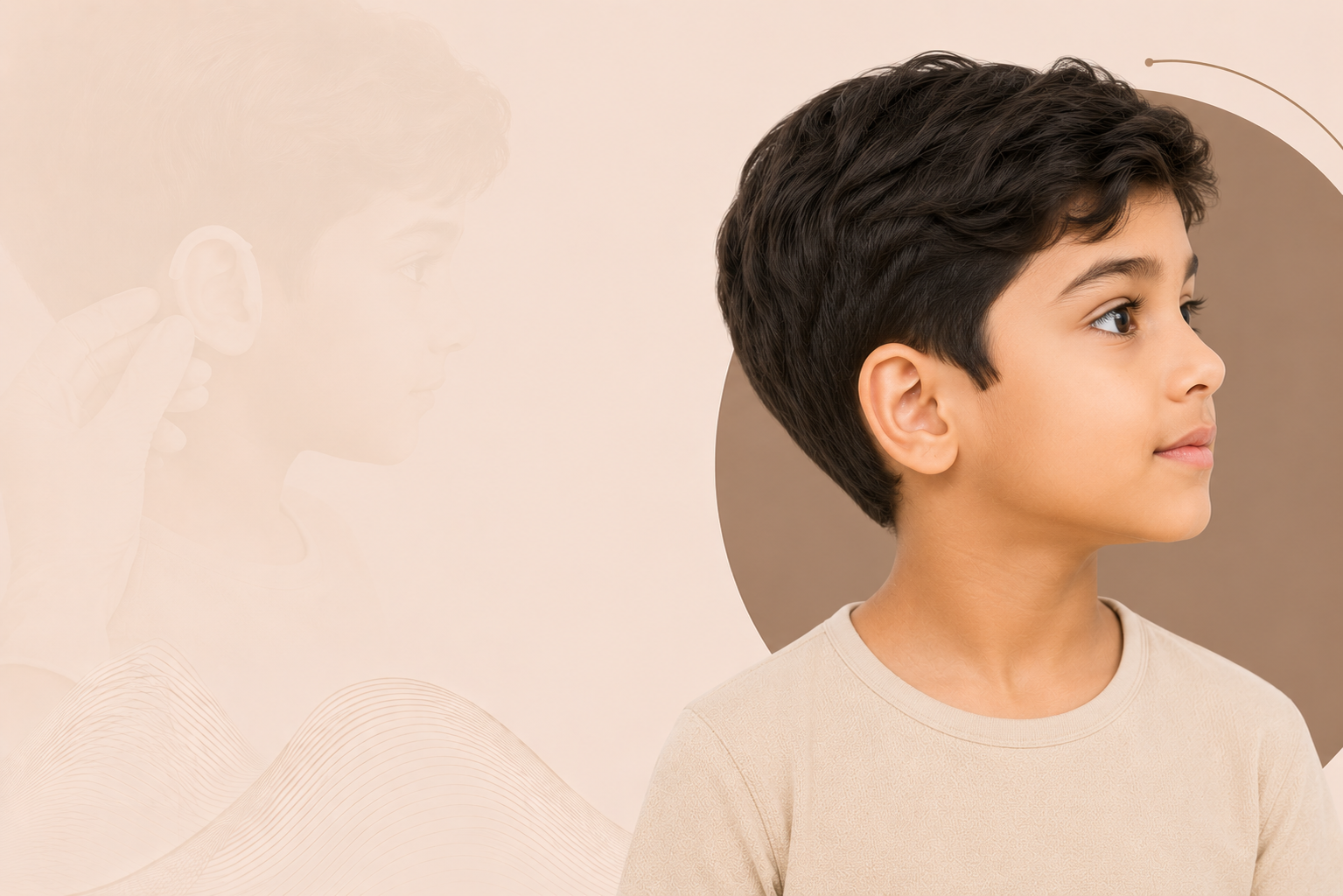
Rebuild a Natural, Symmetrical Outer Ear Using Advanced Techniques
Microtia is a condition present from birth where the outer ear doesn't develop fully, ranging from a smaller than usual ear to a complete absence of the outer ear. Rebuilding this delicate structure is considered one of the more technically demanding areas of plastic surgery, since the surgeon needs to sculpt an ear that closely matches the height, shape, and curves of the healthy side.
Dr. Sushrut Kalra offers advanced microtia reconstruction in Jaipur, using either the child's own rib cartilage or a biocompatible synthetic framework covered with local tissue. Every plan prioritizes safety, long-term symmetry, and close coordination with hearing specialists.
Reconstructive Pathways for Congenital Ear Differences
-
Understanding the Grades of Microtia Covers all levels of ear underdevelopment, from a mildly small ear with a working canal to a complete absence of the outer ear and canal.
-
Rib Cartilage Reconstruction (Two-Stage Technique) Considered the gold standard. The first stage uses cartilage harvested from the ribs to create a custom ear framework placed under the scalp. About 6 months later, the second stage lifts and projects the new ear away from the head.
-
Synthetic Framework Reconstruction (Single Stage) Uses a pre made, biocompatible synthetic ear framework instead of rib cartilage. It's covered using tissue from the scalp and a skin graft, often completed in a single surgery.
-
Coordination with Hearing Specialists Works closely with pediatric ENT specialists and audiologists to plan ear reconstruction in a way that doesn't interfere with future hearing related procedures.
-
Matching Natural Symmetry Uses a detailed template of the healthy ear, or a parent's ear in cases affecting both sides, to closely match shape, angle, and position.
-
Careful Donor Site Care Rib cartilage is harvested through a small, discreet chest incision, closed carefully to minimize scarring as the child grows.
-
Scalp Incision Planning Incisions on the scalp are placed carefully to preserve hair growth and stay hidden within the hairline.
Frequently Asked Questions
In most cases, yes, since it's often accompanied by a narrow or missing ear canal, which can cause hearing loss. The inner hearing structures are usually healthy, so a hearing evaluation helps guide the right treatment for your child.
For rib cartilage reconstruction, the ideal age is 8 to 10 years, once the chest and healthy ear have developed enough. For a synthetic framework, surgery can be done earlier, around 5 to 6 years of age.
Rib cartilage uses the child's own tissue, which grows naturally with them and has a low risk of complications, but requires two surgeries and a chest incision. A synthetic framework can be done in one surgery at a younger age, though it carries a slightly higher risk of exposure if the ear experiences significant trauma later.
Yes, if rib cartilage is used, since it's living tissue that grows with the child. A synthetic framework doesn't grow, so it's sized to match the expected adult ear size instead.
They need careful planning together. Outer ear reconstruction is usually done first, since operating on the ear canal beforehand can affect the blood supply needed for successful ear reconstruction.
After the first stage of rib cartilage reconstruction, a hospital stay of 3 to 5 days is common for monitoring. A protective ear cup is worn for about 4 to 6 weeks to protect the healing cartilage during sleep and daily activity.