
Our services
Request an appointment
Reserve your spot with our medical team in just minutes.
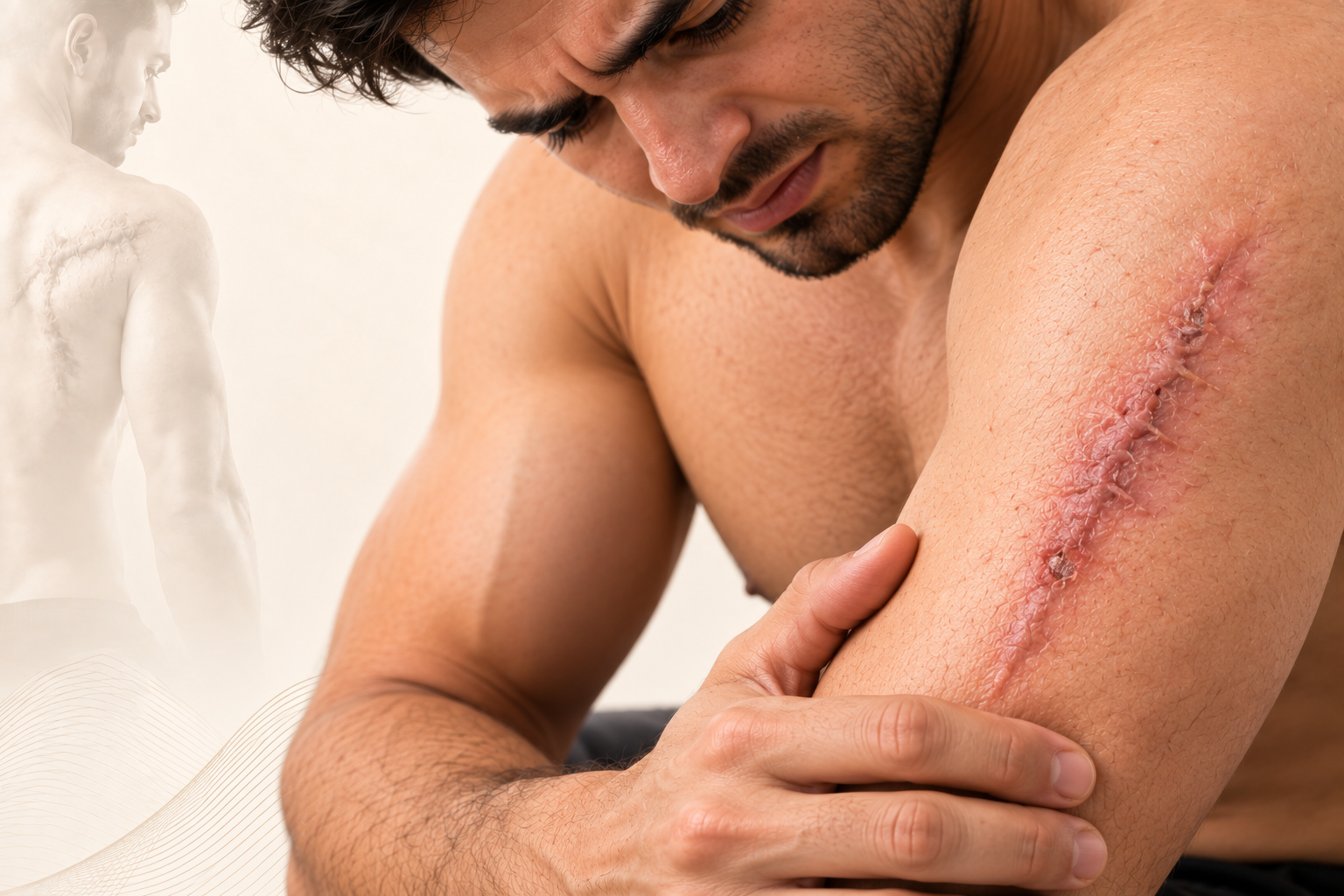
Scar Management in Jaipur | Advanced Scar Revision and Reconstruction by Dr. Sushrut Kalra
Scars form as a natural part of healing after surgery, injury, burns, or severe acne, but sometimes the body's healing response results in scars that are raised, tight, or uncomfortable. Since different types of scars, like keloids, tight contractures, or acne pitting, each need a different approach, effective scar management usually depends on choosing the right technique for your specific scar.
Dr. Sushrut Kalra offers personalized scar management in Jaipur, combining surgical and non-surgical techniques based on your scar's type, age, and location, aiming for a more comfortable, natural looking result.
How Scar Management Can Help
-
Improves Scar Appearance Helps reduce the width, elevation, and visibility of scars over time.
-
Softens Raised Scars Helps flatten thickened or raised scars, including keloids, using targeted treatment.
-
Improves Skin Texture Helps smooth rough or uneven scar tissue for a more even skin surface.
-
Restores Fluid Mobility Helps release tight scars that are restricting movement near joints.
-
Reduces Symptoms Helps ease itching, tenderness, or tightness often associated with scarring.
-
Multiple Treatment Options Combines surgical and non-surgical techniques depending on your specific scar.
-
Supports Long-Term Healing Includes supportive care like silicone therapy and sun protection to help maintain results.
-
A Personalized Assessment Treatment is based on your scar's age, depth, location, and skin type.
Frequently Asked Questions
No, scars can't be fully erased once the skin has healed, but modern treatments can significantly improve their appearance and texture.
This includes wide surgical scars, traumatic scars, burn related contractures, keloids, and deep acne scars.
Early treatments like silicone therapy can start within a few weeks of healing, while surgical revision is usually done once the scar has fully matured, around 6 to 12 months later.
No, many scars respond well to non-surgical treatments like injections, microneedling, or laser therapy. Surgery is generally reserved for more significant scars.
Non-surgical treatments have minimal downtime, while surgical revision involves stitches for about a week, with full healing continuing over several weeks.
It's possible, since keloids can be more stubborn than other scars. Combining surgical removal with follow up treatment helps reduce the chance of recurrence.